Most people don't return sunglasses because they're poorly made — they return them because they don't look right once they're actually wearing them. A pair that looked perfect on the model or in the product photo can feel completely off on your own face. The difference almost always comes down to one thing: face shape.
At GlassesYou, we try on hundreds of frames across dozens of brands, and one pattern shows up constantly — the best-performing frame on paper isn't always the best-looking frame on a real face. Here's how to actually match sunglasses to your face shape, so you stop guessing and start choosing with confidence.
Figure Out Your Face Shape
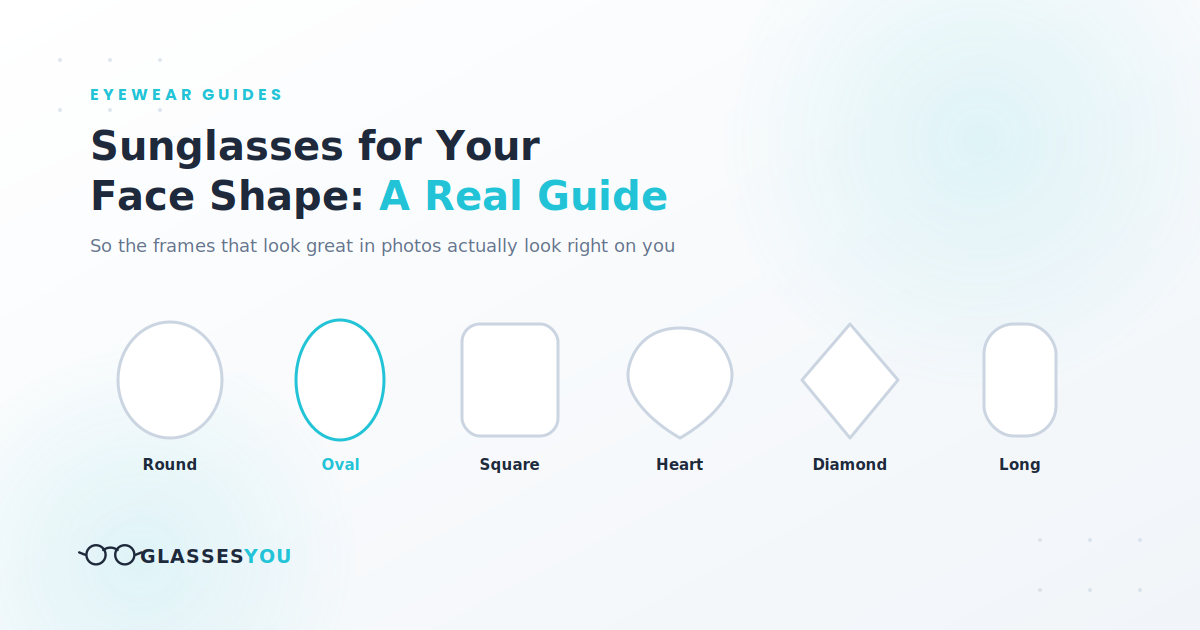
You don't need precise measurements — just look at your face in a mirror and notice the widest point and the overall outline. Most faces fall into one of these general categories:
- Round: Similar width and length, soft curves, no sharp angles.
- Oval: Slightly longer than wide, balanced proportions, considered the most versatile shape.
- Square: Strong jawline, forehead and jaw are similar width, more angular.
- Heart: Wider forehead, narrower chin, sometimes with a widow's peak.
- Diamond: Narrow forehead and jaw, wider cheekbones.
- Long / Rectangle: Noticeably longer than wide, straighter sides.
Most people are a blend of two shapes, and that's completely normal — use these as a starting point, not a strict rule.
Match the Frame Shape That Balances Yours
The general rule in eyewear is contrast: frames that balance your face shape tend to look more proportional than frames that mimic it exactly.
- Round faces: Angular frames add definition. Square or rectangular frames (think classic Ray-Ban Wayfarer styles) work well here.
- Square faces: Rounded or oval frames soften strong jawlines. Round frames, like those from Persol's classic collection, are a natural fit.
- Heart-shaped faces: Frames wider at the bottom balance a narrower chin. Cat-eye or bottom-heavy aviator styles work well.
- Diamond faces: Oval or rimless frames complement wide cheekbones without adding extra width up top.
- Long / Rectangular faces: Oversized or wider frames help shorten the appearance of the face. Avoid narrow, small frames that emphasize length.
- Oval faces: This is the flexible shape. Most frame styles work, from classic aviators to bold, oversized designer frames.
Consider Frame Size Relative to Your Face
Shape isn't the only factor — proportion matters just as much. A frame that's too small on a larger face looks childish; a frame that's too oversized on a smaller face overwhelms it. As a rough guide:
- The frame width should roughly match the widest part of your face.
- Eyebrows should be visible above the frame, not hidden underneath it.
- The bottom of the frame shouldn't rest on your cheeks when you smile.
If you're shopping in person, this is easy to check. If you're shopping online, look for brands that publish frame width and lens height in millimeters, and compare them to a pair of glasses you already own and like.
Think About Color Alongside Shape
Frame color affects how a shape reads on your face just as much as the shape itself. In our testing, a few patterns held up across brands:
- Warmer skin tones tend to pair well with tortoiseshell, gold, and warm brown frames.
- Cooler skin tones tend to pair well with black, silver, and cool gray frames.
- Bold or statement frames (common in Versace, Balenciaga, and Alexander McQueen collections) work best when the rest of your styling is kept simple.
- Neutral frames (classic black or tortoiseshell, common in Ray-Ban and Persol) are the safest long-term investment if you only want to buy one pair.
Don't Skip the Physical Fit
Shape and color get all the attention, but physical fit is what determines whether you'll actually wear the glasses. Pay attention to:
- Bridge fit: The frame shouldn't pinch or slide down your nose.
- Temple length: Arms should rest comfortably over your ears without pressure points.
- Weight: Heavier frames (common in some metal luxury designs) can feel great for short wear but uncomfortable over a full day.

Snober Kanwal
Tech Reviewer, Content SpecialistI specialize in tech journalism and product reviews at CouponsBeast. By breaking down digital trends, gadgets, and software into easy-to-digest guides, I create SEO-optimized content that ranks on search engines, builds consumer trust, and drives high-intent affiliate traffic for global audiences.
Comments 0
No comments yet. Be the first to share your thoughts!